The Social License Imperative: Why Mining Companies Cannot Afford to Choose Between Speed and Community Trust
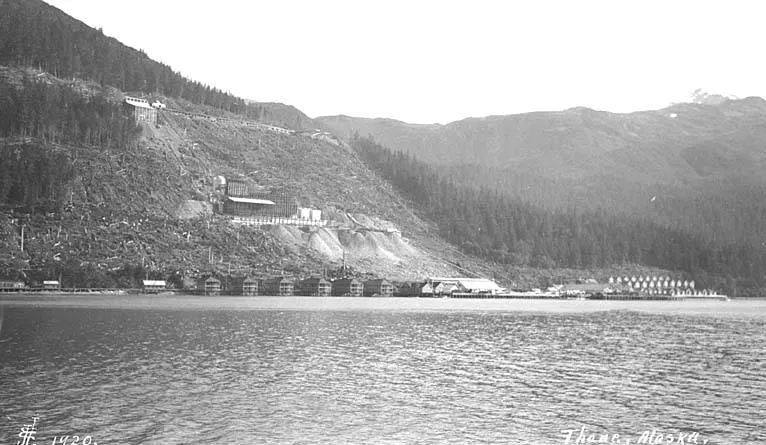
Photo: John E. Thwaites, Public domain, via Wikimedia Commons
There is a version of the current domestic mining debate that frames permitting reform and community engagement as opposing forces—a zero-sum contest between the urgency of resource development and the legitimate concerns of people who live near proposed mine sites. That framing is understandable. It is also, in the long run, counterproductive.
The operators who are navigating this moment most effectively are not the ones who have found clever ways to minimize community opposition or accelerate their way through regulatory review. They are the ones who have recognized that social license—the informal but consequential approval of affected communities—is not a soft consideration to be managed at the margins of a project. It is a structural variable that determines whether a project reaches production at all.
The Pressure From Above
The federal government's posture on domestic mineral development has shifted considerably in recent years. Legislative vehicles including the Infrastructure Investment and Jobs Act and the Inflation Reduction Act have directed significant capital toward building out clean energy supply chains, and the minerals required to support that buildout—lithium, cobalt, nickel, copper, rare earth elements—are in critically short domestic supply.
In response, permitting agencies have faced mounting political pressure to reduce review timelines. The average time required to permit a new mine in the United States has historically ranged from seven to ten years, a figure that compares unfavorably with peer nations and that critics argue is structurally incompatible with the urgency of the energy transition. Bipartisan legislation aimed at streamlining the National Environmental Policy Act review process has advanced through Congress in various forms, signaling genuine political will to accelerate approvals.
For mining operators, this represents an opportunity—but it is an opportunity that carries significant risk if pursued without corresponding attention to the communities that will live with the consequences of development.
The Pressure From Below
At the local level, the dynamics are moving in a different direction. Community opposition to mining projects has become more sophisticated, better organized, and more legally capable than at any prior point in the industry's history. Environmental advocacy organizations have developed substantial expertise in NEPA litigation. Tribal nations have increasingly asserted treaty rights and consultation requirements that, when not honored in good faith, can generate injunctions capable of halting projects for years. Rural communities that once might have viewed a mine primarily as an employment opportunity now weigh that benefit against concerns about water quality, landscape disruption, and long-term liability.
The result is a landscape in which permitting streamlining, while potentially valuable, does not by itself resolve the central challenge. A company that moves quickly through a compressed federal review process and then encounters a well-funded legal challenge from a coalition of local stakeholders has not saved time. It has deferred a conflict that will ultimately prove more costly than early engagement would have been.
What "Good Faith" Actually Looks Like
The phrase "community engagement" has been used so broadly in corporate communications that it has lost much of its operational meaning. For some operators, it describes a series of public meetings held after key project decisions have already been made—a notification exercise rather than a genuine consultation. Communities recognize the difference, and they respond to it accordingly.
Operators who have successfully built social license in contested environments share several characteristics. They begin stakeholder engagement before the formal permitting process, often before a project has been publicly announced. They disclose project information in formats that are accessible to non-technical audiences. They establish independent monitoring committees with genuine authority to raise concerns and receive substantive responses. And they make commitments—on water management, on reclamation bonding, on local hiring—that are legally binding rather than aspirational.
In southeastern Idaho, a phosphate mining operation navigating expansion permitting developed a community advisory panel that included not only supportive agricultural interests but also representatives of tribal governments and conservation groups that had historically opposed the company's activities. The process was contentious. It required the operator to modify certain aspects of the project design and to accept more rigorous water quality monitoring requirements than the minimum required by regulation. It also produced a project with substantially broader community support that moved through the formal permitting process with fewer legal challenges than comparable projects in the region.
The Regulatory Middle Ground
Permitting agencies occupy a difficult position in this dynamic. The US Forest Service, the Bureau of Land Management, and the Army Corps of Engineers are simultaneously being pressed by Congress to accelerate timelines and by advocacy organizations to conduct more thorough environmental reviews. The agencies are operating with staffing levels that have not kept pace with the volume of applications, and the technical complexity of modern mine proposals—particularly those involving large-scale water management systems or proximity to sensitive ecological areas—demands significant analytical resources.
Some agency officials have expressed cautious support for pre-application engagement programs that allow operators to surface and resolve potential issues before the formal review clock begins. These programs do not reduce the rigor of environmental analysis, but they can prevent the discovery of unresolved conflicts late in a review process, which is typically when delays become most expensive and most damaging to project timelines.
Rethinking the Calculus
The operators most likely to succeed in the current environment are those who understand that community trust and permitting efficiency are not competing priorities. They are, in practice, deeply interdependent.
A project that enters formal review with broad community support, a transparent environmental record, and a demonstrated history of good-faith engagement with affected stakeholders is a fundamentally different regulatory proposition than a project that arrives at the same stage with unresolved conflicts and organized opposition. The former moves through the process more predictably. The latter generates the kind of protracted litigation that makes the industry's average permitting timeline look optimistic.
The domestic mineral imperative is real. The urgency is legitimate. But the companies that will be producing critical minerals at scale in the next decade are not necessarily the ones moving fastest today. They are the ones building the relationships, the reputations, and the community partnerships that allow development to proceed—and to endure.