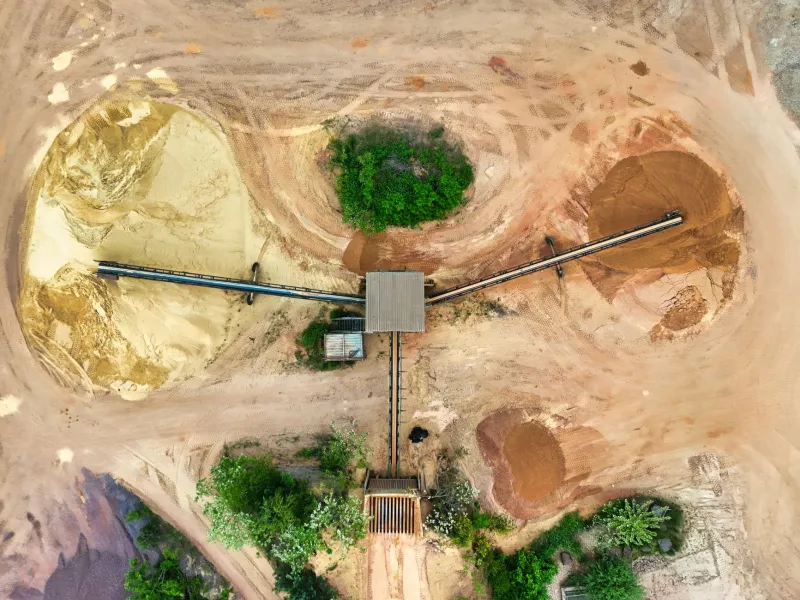
The Substation Bottleneck: Power Readiness Is Becoming Mining's Real Development Clock
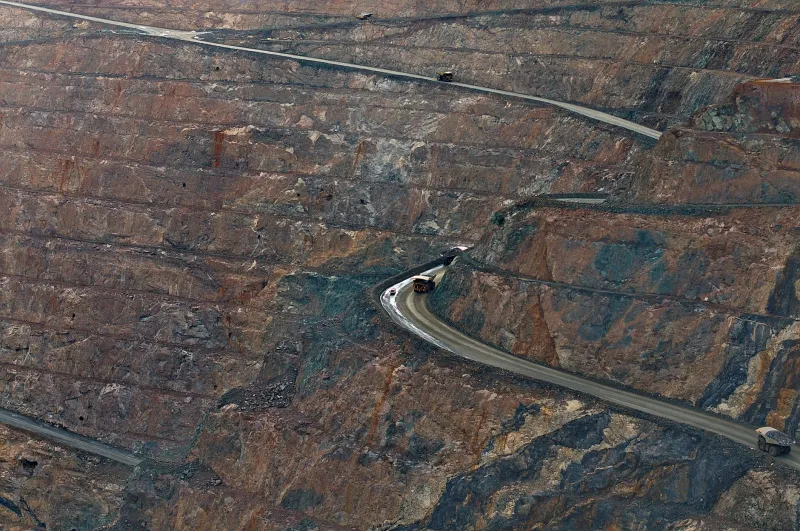
For decades, the critical path at a US mine ran through permitting, drilling, and commissioning. In 2026, it increasingly runs through a utility interconnection queue. As operators electrify haul trucks, conveyors, crushers, and processing lines, the mine plan is colliding with a less adaptable system: the local grid. The result is a new kind of development risk, one measured not only in megawatts but in months of delay, cost allocation disputes, and capital sitting idle while a substation is upgraded.
The Load Behind the Ore
Electrification is not a cosmetic sustainability project. It changes the physics and economics of a site. A diesel haul fleet can be scaled incrementally with fuel deliveries; an electric fleet depends on firm capacity, distribution upgrades, and redundancy. Conveyors that replace truck cycles may reduce operating cost per ton, but they concentrate electrical load. Processing lines with finer grinding and higher recovery rates demand more connected load and more stable power quality. Each decision pushes the mine closer to the utility's planning process.
The challenge is that grid capacity is not distributed evenly. Some mining regions have robust transmission and available distribution capacity. Others are served by rural cooperatives or smaller utilities where a single large load can rival the existing customer base. In those cases, the utility must study the project, model voltage impacts, and decide who pays for new lines, transformers, and protection equipment. That study can take longer than the permitting work the operator has already financed.
When the Queue Becomes the Schedule
Interconnection queues are often described as a renewable-energy problem, but they are now a mining problem. Large industrial loads require transmission and distribution studies, and in organized markets they may also require capacity and ancillary-service arrangements. Even where physical capacity exists, the administrative sequence can be lengthy. An operator that waits until construction is underway to request service is effectively accepting schedule risk it cannot control.
A more effective approach treats power as a pre-feasibility discipline. Before committing capital, operators should map the serving utility, the available feeder capacity, the nearest transmission voltage, and the likely need for a dedicated substation. They should ask whether the site can be served radially or whether redundancy is required for critical processes. They should also test the utility's assumptions about load factor, power factor, and harmonic distortion, because those assumptions can change the size and cost of required upgrades.
Contracts That Behave Like Infrastructure
Utility contracts deserve the same scrutiny as orebody models. Demand charges, minimum take-or-pay provisions, capacity reservations, and line-extension allowances can materially alter project economics. A favorable energy rate is not necessarily a favorable contract if it comes with inflexible load commitments or penalties for curtailment. Operators should model electricity costs across a range of operating scenarios, including startup, ramp-up, maintenance shutdowns, and commodity-driven production cuts.
On-site generation and microgrids are becoming practical hedges, not just remote-site solutions. Natural gas reciprocating engines, solar-plus-storage, and dual-fuel systems can bridge the gap while utility upgrades are completed. They can also provide resilience for processes where an outage damages equipment or creates safety risk. The trade-off is complexity: fuel supply, emissions permitting, maintenance, and controls all become additional operating disciplines. The right answer depends on the value of uptime, the local utility's reliability record, and the cost of delay.
A Practical Checklist for Power Readiness
Before committing capital, executives and technical teams should be able to answer the following questions with evidence, not assumptions.
- Which utility or cooperative will serve the site, and what is its recent experience with loads of this size?
- What is the available capacity at the relevant voltage, and what upgrades are likely to be required?
- Has the utility provided a written study scope, timeline, and cost-allocation methodology?
- Are transmission or distribution constraints likely to trigger a queue process, and what position would the project hold?
- What demand charges, minimum bills, and capacity reservations will apply during construction and ramp-up?
- Does the contract permit curtailment or partial load without punitive penalties?
- Is on-site generation needed for construction power, backup, or bridging until utility service is available?
- What fuel, emissions, and maintenance obligations would on-site generation create?
- Has the project modeled power costs under low-, base-, and high-production scenarios?
- Is there a contingency plan if the utility's timeline slips by six, twelve, or eighteen months?
Underwriting the Electron
Mine finance has always required geological judgment. It now requires electrical judgment as well. A project with a strong reserve and a weak power plan is not fully de-risked. Conversely, an operator that secures capacity early, structures a flexible contract, and designs for staged electrification can turn the substation from a bottleneck into a competitive advantage. In the next US mining cycle, the winners may be the companies that understood the grid as well as they understood the ground.