Smarter, Faster, Safer: The Technologies Transforming Mining Operations Right Now
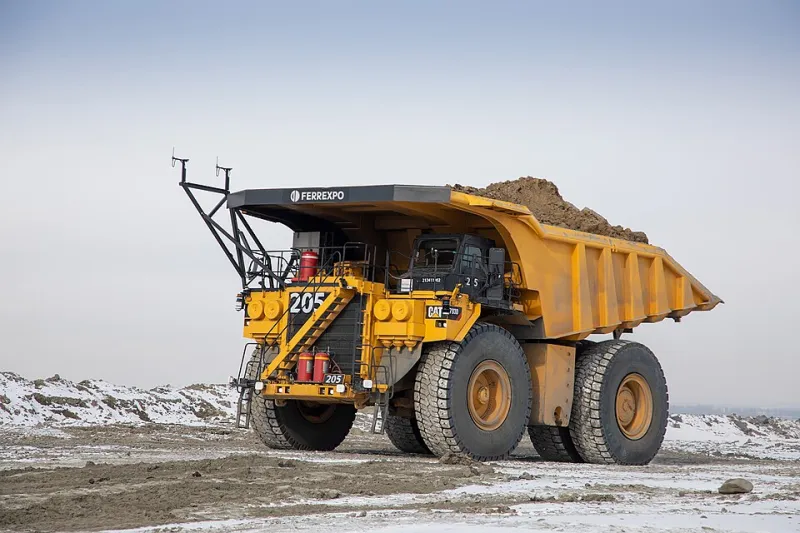
Photo: RobSimmons223311, CC BY-SA 4.0, via Wikimedia Commons
For much of its history, mining has been defined by physical labor, mechanical power, and hard-won operational experience passed from one generation of miners to the next. Those foundations have not disappeared — but they are being rapidly augmented by a new layer of digital intelligence, autonomous systems, and real-time data analytics that are changing what modern extraction looks like from the surface to the ore face.
At Horizon Miners, we track these developments closely, not as distant industry trends, but as practical capabilities we evaluate, adopt, and refine in our own operations. What follows is a candid assessment of five technologies that are delivering measurable results in mining operations across the United States in 2024.
1. AI-Powered Ore Detection and Grade Control
Identifying where valuable ore ends and waste rock begins has always been one of the central challenges in mineral extraction. Traditional methods rely on geological sampling, core drilling, and laboratory assay results that can take days or weeks to return. By the time that data informs operational decisions, the mining face may have already moved on.
Artificial intelligence is compressing that feedback loop dramatically. Machine learning models trained on geological datasets — including drill core imagery, geophysical survey results, and historical grade data — can now generate real-time ore body predictions with a degree of accuracy that rivals traditional assay-based methods in many applications.
Several US operations are already deploying AI-driven grade control systems that analyze rock face imagery using high-resolution cameras and spectral sensors, then feed predictions directly to equipment operators and blast design teams. The practical benefit is twofold: more ore is recovered from each blast, and less waste rock enters the processing stream — reducing energy consumption and processing costs downstream.
For Horizon Miners, integrating AI-assisted grade control into our operational workflow represents one of the clearest opportunities to improve resource recovery without increasing the physical footprint of extraction activities. The technology does not replace geological expertise; it amplifies it.
2. Autonomous and Semi-Autonomous Haul Trucks
Haul trucks are the workhorses of open-pit mining — enormous, expensive, and in constant motion. They are also one of the most significant sources of operational cost and safety risk on any large-scale surface mining site. Driver fatigue, operator error, and the inherent hazards of operating multi-hundred-ton vehicles in close proximity to other heavy equipment contribute to a disproportionate share of serious mining incidents.
Autonomous haul truck technology, pioneered by major equipment manufacturers and now deployed at scale in operations across the American West and in international markets, addresses these risks directly. Vehicles equipped with GPS positioning systems, radar, LiDAR sensors, and onboard computing can navigate pre-programmed haul routes, respond to obstacles in real time, and coordinate with other autonomous and human-operated equipment without a driver in the cab.
The results in documented deployments have been compelling. Autonomous truck fleets consistently demonstrate higher utilization rates than human-operated equivalents — they do not require shift changes, meal breaks, or rest periods. Fuel efficiency improves when vehicles follow optimized speed and braking profiles. And the removal of personnel from high-hazard equipment environments translates directly into measurable safety gains.
Semi-autonomous configurations, where a remote operator monitors and can intervene in vehicle operations, offer an intermediate step that many operations are finding practical as they build toward full autonomy. Horizon Miners views both configurations as legitimate tools in the operational toolkit, with deployment decisions driven by site-specific conditions rather than a one-size-fits-all approach.
3. Drone Surveying and Aerial Mapping
Accurate spatial data is the foundation of effective mine planning, blast design, and volume reconciliation. Historically, acquiring that data required survey crews to physically traverse active mining areas — an activity that introduced both time delays and safety exposure.
Unmanned aerial vehicles, commonly referred to as drones, have fundamentally changed the economics and logistics of mine surveying. A drone equipped with photogrammetry or LiDAR payload can survey a large open-pit operation in a fraction of the time required by ground-based methods, generating point cloud datasets and three-dimensional surface models with centimeter-level accuracy.
The applications extend well beyond basic topographic mapping. Drone-based thermal imaging can identify spontaneous combustion risks in coal and sulfide ore stockpiles. Multispectral sensors detect vegetation stress patterns that may indicate subsurface seepage from tailings facilities. Routine aerial inspections of haul road conditions, slope stability indicators, and equipment positioning can be conducted without placing personnel in potentially hazardous areas.
For Horizon Miners, drone surveying has become a standard component of our site management protocols. The frequency and granularity of spatial data available to our planning teams has increased substantially, enabling more responsive operational decisions and improving the accuracy of resource inventory reporting.
4. Real-Time Processing Optimization
The concentrator or processing plant is where extracted ore is transformed into saleable product — and it is frequently where the greatest inefficiencies in the value chain reside. Traditional processing operations have relied on periodic laboratory sampling and operator experience to adjust grinding, flotation, and leaching parameters. The result is a system that is perpetually catching up to conditions that have already changed.
Real-time process optimization systems change that dynamic by instrumenting every stage of the processing circuit with sensors that continuously monitor variables including particle size distribution, pulp density, reagent concentrations, and recovery rates. Advanced process control software — increasingly incorporating machine learning components — analyzes this data stream and adjusts operational parameters automatically to maintain target recovery performance.
The efficiency gains achievable through real-time optimization are significant. Industry case studies have documented recovery improvements of two to five percentage points in flotation circuits operating under optimized control — a meaningful impact on revenue when applied across high-throughput operations processing thousands of tons of ore per day.
Horizon Miners has prioritized processing optimization as a key lever for improving the overall value extracted from each ton of ore we handle. When recovery rates improve without additional throughput, the environmental footprint per unit of product decreases — a benefit that aligns operational performance with responsible resource stewardship.
5. Wearable Technology and Connected Worker Systems
The most sophisticated autonomous equipment and AI systems still operate alongside human workers, and the safety and productivity of those workers remains a central operational concern. Wearable technology — including smart helmets, proximity alert wristbands, physiological monitoring devices, and connected personal protective equipment — is creating a new layer of situational awareness that benefits both individual workers and site management.
Connected worker platforms aggregate data from individual wearables into a real-time dashboard that allows safety supervisors to monitor worker locations, detect proximity hazards between personnel and mobile equipment, and receive alerts when physiological indicators suggest heat stress or fatigue. In emergency scenarios, precise worker location data dramatically improves the speed and effectiveness of rescue response.
Beyond safety applications, connected worker systems generate operational data that informs workflow optimization. Understanding how personnel move through a site, where bottlenecks occur, and how task completion times compare against planned schedules allows management teams to identify and address inefficiencies that would otherwise remain invisible.
At Horizon Miners, we view connected worker technology as an investment in our most valuable operational asset: the skilled professionals who work in and around our extraction and processing facilities every day.
The Integrated Future of Mining Operations
What is most significant about these five technologies is not any single capability in isolation, but the way they are beginning to function as an integrated system. AI-driven ore detection informs blast design, which shapes the material presented to autonomous haul trucks, which deliver ore to processing plants operating under real-time optimization — all while connected worker systems maintain situational awareness across the entire operation.
This integration is the direction in which modern mining is moving, and Horizon Miners is committed to being at the front of that progression. Our investment in technology evaluation, operator training, and systems integration is driven by a straightforward conviction: the extraction operations that will define American mineral production in the coming decades will be those that combine geological expertise with the full capability of available technology. We intend to be among them.