Capital Trapped Underground: Why Billions in Mining Equipment Is Collecting Dust Instead of Producing Returns
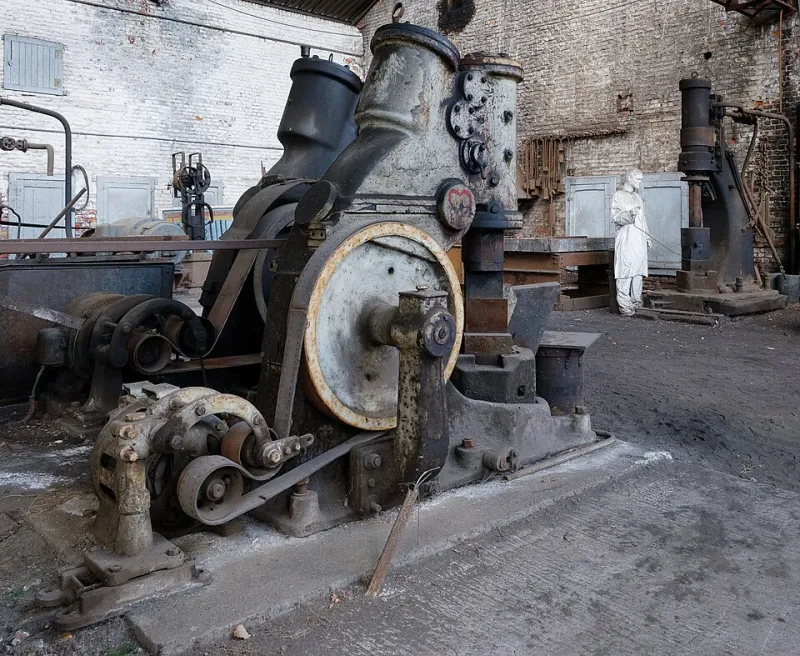
Photo: Trougnouf (Benoit Brummer), CC BY 4.0, via Wikimedia Commons
There is a peculiar irony embedded in the current state of American mineral extraction. At a moment when domestic mining has never been more strategically important—when policymakers, energy executives, and defense planners are all calling for accelerated production of critical minerals—some of the most advanced mining equipment ever manufactured sits in climate-controlled warehouses, crated and idle, waiting for conditions that may never arrive on schedule.
This is not a fringe phenomenon. Industry analysts estimate that hundreds of millions of dollars in capital equipment—continuous miners, autonomous haul trucks, advanced drilling rigs, and precision ore-processing systems—are underutilized at any given moment across US operations. In some cases, the machinery has never turned a single production cycle since delivery. The reasons are varied, interconnected, and largely structural. But the financial consequences are straightforward: capital deployed without return is capital slowly destroying itself.
The Permitting Paradox
The most visible culprit is regulatory timing. A mining operation that secures financing, orders equipment, and begins site preparation may wait years before receiving the permits necessary to commence extraction. Federal environmental review processes under the National Environmental Policy Act, combined with state-level approvals and tribal consultations, routinely extend project timelines well beyond original projections.
Equipment suppliers, meanwhile, operate on their own delivery schedules. Lead times for specialized mining machinery can stretch twelve to twenty-four months, compelling operators to place orders long before permits are secured. The result is a structural mismatch: machinery arrives on time; permits do not. And while the equipment sits in storage, depreciation clocks, insurance premiums, and financing costs continue accumulating without interruption.
This is not a problem that better project management alone can solve. It is a systemic misalignment between the capital procurement timelines of private industry and the administrative timelines of regulatory agencies—a gap that costs American mining operators dearly every year.
Financing Structures That Compound the Problem
Beyond permitting, the financial architecture of many mining projects actively worsens the equipment utilization problem. Traditional project financing structures—designed around anticipated production schedules—begin drawing interest and principal obligations from the moment capital is disbursed, regardless of whether operations have commenced. When permitting delays push back production start dates, operators find themselves servicing debt on equipment that is generating no revenue.
This creates a compounding pressure. Cash reserves that should fund operational ramp-up are redirected to debt service. Lenders, growing nervous about timelines, may tighten covenants or accelerate repayment terms. In the most severe cases, equipment purchased specifically for a given project is quietly liquidated at a loss to meet near-term financial obligations—a painful outcome that sets operations back years.
Some of the more financially sophisticated operators in the sector have begun structuring equipment acquisition differently. Lease-to-own arrangements, deferred delivery contracts negotiated directly with manufacturers, and equipment-sharing consortia among non-competing regional operators are all mechanisms gaining traction. These approaches preserve optionality and reduce the carrying cost of idle assets during the pre-production phase.
The Deployment Gap: Operational Bottlenecks in Active Mines
Permitting and financing explain equipment idleness in pre-production projects. But underutilization also plagues active mining operations—and here, the causes are more operational in nature.
Advanced mining systems frequently require specialized technical personnel for operation and maintenance. When those personnel are unavailable—due to workforce shortages, high turnover, or inadequate training pipelines—sophisticated equipment defaults to a status that industry insiders call "shelf mode": powered down, maintained at minimum standards, and awaiting operators who may not materialize for months. Autonomous haul trucks, precision drill rigs, and real-time ore-sorting systems are particularly vulnerable to this dynamic, as each demands a narrow and currently scarce skill set.
Integration challenges compound the issue. Modern mining equipment increasingly relies on interconnected data systems, fleet management software, and sensor networks. When a mine's existing infrastructure cannot support these integrations—due to legacy systems, connectivity limitations, or IT gaps—advanced equipment is effectively reduced to performing at the level of far less expensive alternatives. The technological investment yields no technological premium.
Unlocking Stranded Value: Strategies That Are Working
Despite the scale of the problem, a number of operators are demonstrating that stranded equipment value can be recovered through deliberate strategy.
Modular deployment sequencing is one approach gaining adoption. Rather than waiting for full project approval before committing to equipment acquisition, operators identify discrete, permit-ready phases of a project and deploy equipment incrementally. Early-stage surface operations, site preparation activities, and processing infrastructure development can often proceed under less complex regulatory frameworks, allowing machinery to begin generating value—and operational data—before full extraction commences.
Equipment leasing networks represent another emerging model. Several mid-sized operators in the Western United States have established informal agreements to share specialized equipment during periods when one party's project timeline has been delayed. These arrangements require careful contractual structuring to manage liability and scheduling conflicts, but they convert what would otherwise be a pure carrying cost into a modest revenue offset.
Manufacturer partnership programs are also evolving in response to the utilization problem. Some equipment suppliers have begun offering extended warranty protections, software update guarantees, and technical support commitments that remain active during storage periods—reducing the risk that idle equipment degrades to the point of requiring costly refurbishment before deployment.
Finally, a growing number of operators are engaging permitting consultants and regulatory affairs specialists earlier in the equipment procurement cycle—not to accelerate approvals, but to develop more realistic timeline models that inform procurement decisions. Better forecasting does not eliminate the permitting gap, but it allows capital allocation decisions to be made with clearer eyes.
The Broader Implication
The idle equipment problem is, at its core, a capital efficiency problem—and capital efficiency is what separates sustainable mining operations from those that struggle to attract investment in successive project cycles. Lenders and equity investors pay close attention to asset utilization metrics. Operations that repeatedly acquire equipment they cannot deploy on schedule develop reputations that make future financing more expensive and more difficult to secure.
For the American mining sector to fulfill its strategic potential—supplying the critical minerals that domestic industry and national security increasingly demand—it must solve not only the regulatory and workforce challenges that receive the most public attention, but also the quieter, more technical challenge of deploying capital assets with discipline and precision.
The equipment is ready. The question is whether the systems surrounding it will ever catch up.