Competing with the Congo: How American Operators Are Engineering Their Way Into the Global Cobalt Race
For decades, the Democratic Republic of Congo has functioned as the world's cobalt vault. Holding an estimated 50 percent of global reserves and accounting for roughly 70 percent of annual production, the DRC has occupied a position of near-absolute dominance in a market that underpins some of the most strategically critical technologies of the 21st century. For American mining operators, that dominance has been both a competitive obstacle and a persistent national security concern.
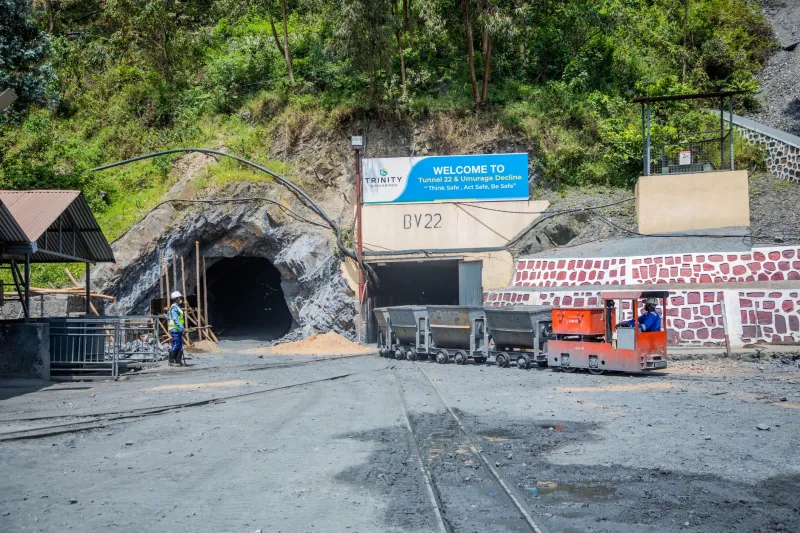
But the competitive calculus is beginning to shift. Driven by geopolitical urgency, federal investment incentives, and a new generation of extraction and processing technologies, US operators are making deliberate moves to reduce their dependence on African supply chains — not by matching Africa's geological abundance, but by outmaneuvering it through innovation.
Why Cobalt Matters More Than Ever
Cobalt's importance is difficult to overstate. It is a core component in lithium-ion battery cathodes, giving electric vehicle batteries their energy density and thermal stability. It is also indispensable in superalloys used in jet turbine engines, cutting tools, and industrial magnets. The US Department of Defense lists cobalt among its most critical minerals, a designation that reflects not only its industrial utility but also the risks associated with concentrated foreign sourcing.
The concern is not purely theoretical. Supply disruptions tied to political instability, artisanal mining controversies, and shifting export policies in Central Africa have sent cobalt prices swinging wildly — a volatility that reverberates through battery manufacturers, aerospace contractors, and defense suppliers alike. When a single nation controls the majority of a resource this consequential, the downstream effects of any disruption are felt across multiple sectors simultaneously.
The American Cobalt Landscape
The United States is not without cobalt resources. Domestic deposits exist in Idaho, Missouri, and Alaska, among other states, though they are generally lower in grade and more complex in mineralogy than their Congolese counterparts. Historically, these characteristics made US extraction economically uncompetitive when African supply was abundant and cheap.
That calculus has changed. Rising cobalt prices, federal support through the Inflation Reduction Act, and a broader national push for critical mineral self-sufficiency have transformed the economics of domestic extraction. Projects that were shelved a decade ago are being revisited with fresh capital and new technological frameworks.
The challenge, however, is not simply one of economics. American operators must contend with stricter environmental regulations, higher labor costs, and ore bodies that demand more sophisticated processing approaches. Meeting those challenges requires not just investment, but genuine technological advancement.
Extraction Innovation at the Process Level
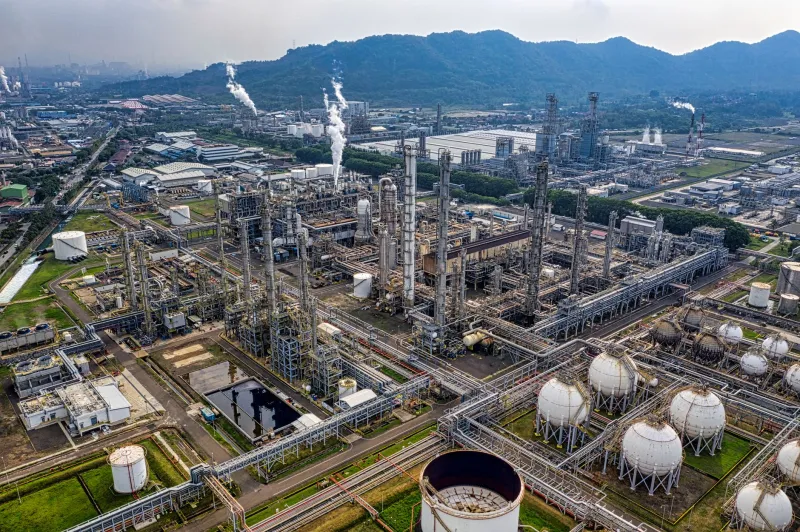
One of the most significant areas of progress involves hydrometallurgical processing — the use of aqueous chemistry to separate and purify metals from complex ore matrices. Traditional pyrometallurgical methods, which rely on high-temperature smelting, are energy-intensive and generate substantial emissions. For operators working under US environmental standards, they present both regulatory and reputational risks.
Advanced leaching techniques, including selective acid leaching and bioleaching — where naturally occurring microorganisms are used to dissolve target metals — are gaining traction as lower-impact alternatives. Several US-based processing firms have reported meaningful improvements in cobalt recovery rates from mixed-sulfide and laterite ores using these methods, narrowing the cost gap with conventional African production.
Solvent extraction and electrowinning (SX-EW) circuits are also being refined to handle the complex polymetallic ores common in North American deposits, where cobalt frequently occurs alongside nickel, copper, and arsenic. The ability to efficiently separate and recover multiple valuable metals from a single ore body materially improves the economics of extraction, effectively subsidizing cobalt production through co-product revenue.
Digitization and Precision Extraction
Beyond chemistry, digital technologies are reshaping how American operators approach the physical act of mining. Real-time ore grade monitoring, enabled by sensor fusion and machine learning algorithms, allows operators to make dynamic decisions about which material to process and which to defer — reducing waste and improving overall recovery efficiency.
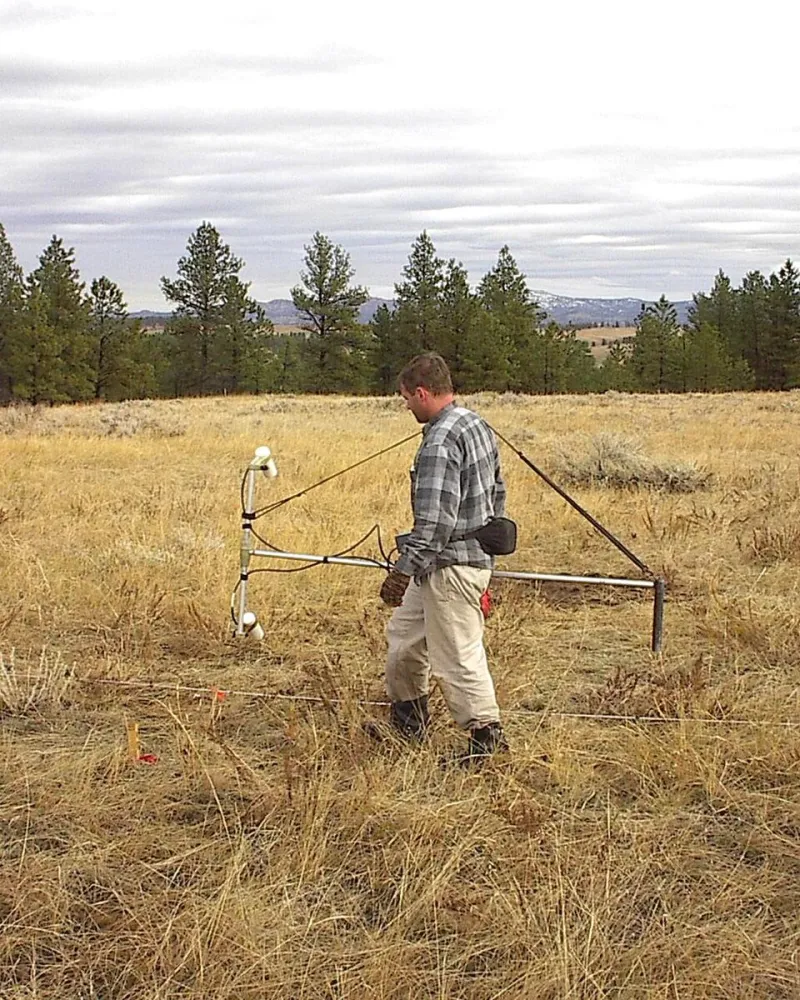
Automated drilling systems, guided by subsurface geological models built from high-resolution geophysical data, are improving the precision with which ore bodies are targeted. In deposits where cobalt concentrations are irregular or patchy, this precision translates directly into lower dilution rates and higher-grade feed material entering the processing plant.
The integration of these digital tools with processing operations — creating what some in the industry describe as a closed-loop extraction system — represents a meaningful competitive advantage over operations that rely on more manual, less adaptive approaches.
Geopolitical Dimensions of Domestic Supply
The strategic implications of this technological push extend beyond individual company balance sheets. A more robust domestic cobalt supply chain reduces American exposure to the geopolitical volatility that has historically characterized Central African mining. It also diminishes the leverage that foreign intermediaries — including Chinese firms that have made substantial investments in DRC cobalt assets — hold over US manufacturers.
The US government has recognized this dynamic explicitly. Through the Defense Production Act, the Department of Defense has directed funding toward domestic critical mineral projects, including cobalt. The goal is not merely to diversify supply, but to establish a baseline of domestic production sufficient to sustain defense manufacturing in the event of a major supply disruption.
For American mining operators, this federal engagement represents both validation and opportunity. Projects that demonstrate genuine technological differentiation — lower environmental footprints, higher recovery rates, more resilient processing infrastructure — are increasingly well-positioned to attract both private capital and government support.
The Road Ahead
The DRC is unlikely to relinquish its position as the world's dominant cobalt producer in the near term. Its geological endowment is simply too large, and its established production infrastructure too entrenched, for any single competitor to displace it quickly. But displacement is not the objective of American operators. The objective is sufficiency — building enough domestic capacity, backed by enough technological capability, to ensure that US industries are never again wholly dependent on a supply chain they cannot influence.
The innovations emerging from American extraction and processing operations are moving that objective closer to reality. In a market defined by strategic stakes, the operators who succeed will be those who treat technology not as a cost center, but as the primary instrument of competitive differentiation.
For the US mining industry, the cobalt challenge is ultimately a catalyst — one that is accelerating the adoption of practices and technologies that will define the sector's competitiveness for decades to come.