Critical Minerals and National Security: How America's Dependence on Foreign Extraction Is Driving a Domestic Mining Renaissance

Photo by Photo by Dan Meyers on Unsplash on Unsplash
For decades, the United States operated under the assumption that global supply chains would reliably deliver the raw materials its economy required. That assumption has been tested severely in recent years. From semiconductor shortages to disrupted pharmaceutical supplies, the vulnerabilities of international dependency have become impossible to ignore. Nowhere is this more consequential — or more urgent — than in the domain of critical mineral extraction.
Today, the minerals that underpin modern defense systems, electric vehicles, renewable energy infrastructure, and advanced electronics are overwhelmingly sourced from foreign nations, many of which hold complicated or adversarial relationships with the United States. The result is a strategic exposure that policymakers, industry leaders, and military planners are now treating as a first-order national security concern.
The Minerals at the Heart of the Matter
The term "critical minerals" encompasses a broad category of elements and compounds deemed essential to economic and national security functions. Among the most consequential are rare earth elements — a group of seventeen metals with names like neodymium, dysprosium, and terbium — which are indispensable in the production of permanent magnets used in fighter jet motors, guided missile systems, wind turbines, and electric vehicle drivetrains.
Lithium and cobalt, meanwhile, are foundational to the battery technologies powering the clean energy transition. Cobalt is a key component in lithium-ion battery cathodes, while lithium itself is the central electrochemical medium in virtually every rechargeable battery manufactured today. Nickel, manganese, and graphite round out the list of materials facing acute demand pressure as electrification accelerates across transportation and grid-scale energy storage.
The geographic concentration of these resources is stark. China currently processes approximately 85 to 90 percent of the world's rare earth elements, even when the raw ore originates elsewhere. The Democratic Republic of Congo supplies more than 70 percent of global cobalt production. Chile and Australia dominate lithium extraction. For a nation seeking to reduce strategic vulnerabilities, this degree of concentration represents a significant and compounding risk.
Policy Shifts Accelerating Domestic Investment
The federal government has moved with unusual speed to address these vulnerabilities. The Inflation Reduction Act of 2022 established domestic content requirements for electric vehicles seeking tax credits, effectively mandating that battery minerals be sourced from the United States or allied nations. The CHIPS and Science Act allocated billions toward securing semiconductor supply chains, with upstream mineral security a complementary priority.
The Department of Defense has also significantly expanded its investments in domestic mineral production through the Defense Production Act, directing funding toward projects that can establish or expand American extraction and processing capacity. The Department of Energy's Loan Programs Office has similarly prioritized financing for domestic critical mineral projects, recognizing that processing infrastructure — not just mining rights — represents a critical bottleneck.
Beyond direct funding, the permitting landscape is also undergoing scrutiny. Critics within the industry have long argued that the United States possesses abundant mineral reserves but lacks the regulatory efficiency to bring them to production at the pace that strategic demand requires. Recent executive actions and legislative proposals have sought to streamline the environmental review process for projects deemed critical to national security, while preserving core environmental protections.
The Industry's Response: Scaling Domestic Capacity
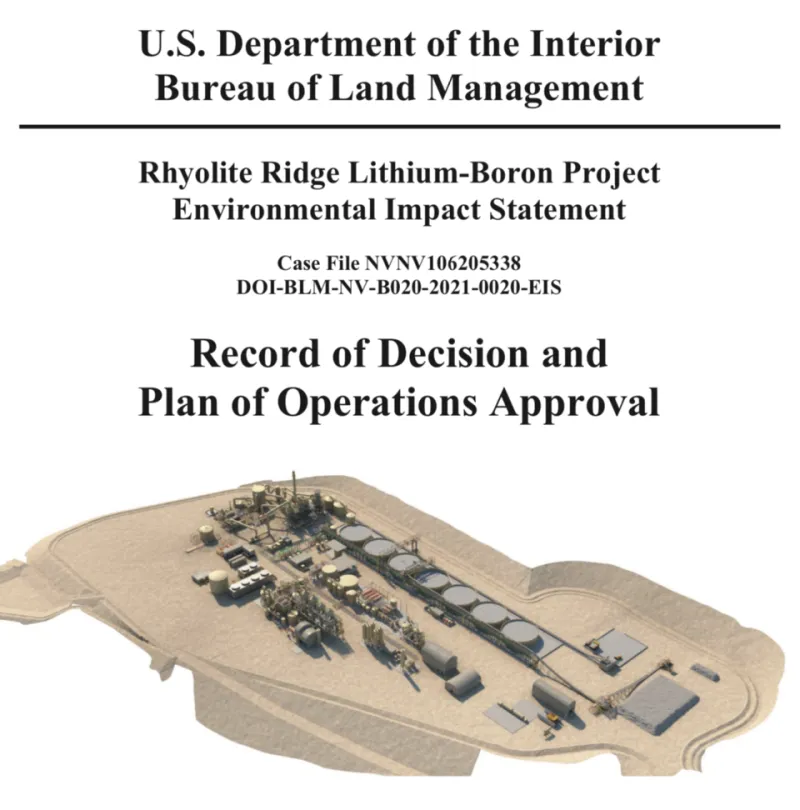
Across the American West and Appalachian regions, mining operators are advancing projects that were previously considered marginal at lower commodity prices or under less favorable policy conditions. Rare earth deposits in California, Wyoming, and Texas are attracting renewed investment. Lithium brine operations in Nevada and the Salton Sea region of California are progressing through permitting and development phases. Hard-rock lithium projects in the Carolinas and the broader Southeast are drawing interest from both domestic operators and foreign automakers seeking to secure supply.
At Horizon Miners, the strategic realignment of American mineral policy has validated a long-held conviction: that the United States possesses the geological endowment, the engineering expertise, and the operational infrastructure to become a reliable, responsible supplier of the minerals its economy and defense establishment require. The company has positioned its operations and technical capabilities to serve the growing demand from domestic battery manufacturers, defense contractors, and clean energy developers who are actively seeking alternatives to foreign supply chains.
"The conversation has fundamentally changed," noted one senior operations executive within the domestic extraction sector during a recent industry forum. "Five years ago, we were competing on price against state-subsidized foreign producers. Today, our customers are asking about supply chain security, processing transparency, and domestic sourcing compliance. That is a different conversation entirely, and it is one we are well-equipped to have."
Processing Capacity: The Missing Link
One dimension of the critical minerals challenge that receives less public attention than raw extraction is the processing and refining gap. Even where the United States mines substantial quantities of ore, the metallurgical infrastructure required to refine that ore into battery-grade or defense-grade material has historically been located overseas — particularly in China.
Addressing this gap requires investment not only in mining operations but in the downstream hydrometallurgical and pyrometallurgical facilities that transform raw ore into usable industrial inputs. Several joint ventures between mining companies, chemical processors, and end-use manufacturers are currently advancing this integrated approach, recognizing that a domestic supply chain is only as strong as its least developed link.
Looking Ahead: The Strategic Horizon
The domestic mining renaissance now underway is not merely a response to a temporary disruption. It reflects a durable recalibration of how the United States thinks about resource sovereignty. The minerals that power twenty-first century technology — from the battery in an electric pickup truck to the magnet in a naval propulsion system — are as strategically significant as the oil and steel of prior industrial eras.
For companies operating in the extraction and processing space, this moment represents both a responsibility and an opportunity. Meeting the nation's critical mineral needs requires sustained investment, technical excellence, and a commitment to operational standards that can withstand the scrutiny of both regulators and the public. The horizon for American mining has rarely looked more consequential — or more promising.