Man and Machine: How the Mining Industry Is Learning to Thrive With Both
There is an apparent contradiction at the heart of modern mineral extraction. Mining companies across the United States are committing extraordinary sums — in some cases, hundreds of millions of dollars per operation — to autonomous haulage systems, remotely operated drilling rigs, and AI-driven processing equipment. At the same time, industry surveys consistently rank labor availability as one of the most pressing operational challenges facing the sector. If automation is the future, the question becomes: why is the talent pipeline more critical than ever?
The answer, it turns out, is that automation and human expertise are not competing forces. They are, increasingly, complementary ones.
The Scale of Investment
Capital allocation toward mining automation has accelerated sharply over the past five years. According to market research firm GlobalData, the autonomous mining equipment market is projected to exceed $5 billion globally by 2027, with North American operations accounting for a significant share of that growth. Domestic copper, iron ore, and lithium producers have been particularly aggressive adopters, driven by the dual pressures of tightening safety regulations and the need to extract more from each operational shift.
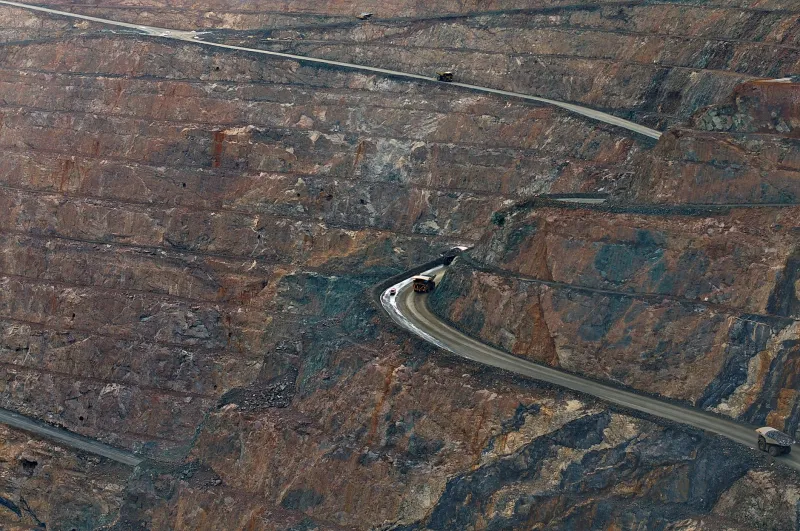
Autonomous haulage trucks — capable of operating continuously across multi-shift cycles without fatigue-related performance degradation — have become something of a flagship technology. Several major open-pit operations in Nevada and Arizona have deployed fleets of driverless trucks that log millions of miles annually. Remote operating centers, sometimes located hundreds of miles from the actual mine site, now oversee drilling and blasting sequences that once required personnel to be physically present in hazardous zones.
The productivity case is compelling. Autonomous systems do not take breaks, are not subject to shift-change handoff delays, and generate continuous streams of operational data that feed predictive maintenance programs. For mining companies operating on thin margins in commodity markets they cannot control, these efficiencies represent real competitive differentiation.
The Workforce Problem Has Not Gone Away
And yet, the labor shortage persists — and in many respects, deepens.
The National Mining Association estimates that the US mining industry will need to fill more than 100,000 positions over the next decade, driven by a combination of retirements among an aging workforce and expanding domestic production targets tied to critical mineral demand. The pipeline of qualified candidates, however, has not kept pace. Enrollment in mining engineering programs at American universities has fluctuated, and the broader skilled trades shortage affecting manufacturing and construction has spilled into extraction operations as well.
Geographic isolation compounds the challenge. Many of the most productive mineral deposits in the United States sit in rural or remote areas where housing availability, infrastructure, and quality-of-life considerations make recruitment difficult. Signing bonuses and elevated wages have helped at the margins, but they have not resolved the structural gap.
So how do automation investment and workforce scarcity coexist — and what does each mean for the other?
Automation Is Changing Jobs, Not Eliminating Them
The narrative that robots will simply replace miners is, upon closer examination, an oversimplification. What autonomous systems are doing, more accurately, is reshaping the composition of the workforce rather than shrinking it.
Consider the case of a large copper operation in southern Arizona that deployed a fully autonomous haulage fleet several years ago. Rather than reducing its overall headcount, the company redeployed former truck operators into roles focused on fleet monitoring, system diagnostics, and data analysis. The transition required substantial retraining investment, but the result was a workforce that was simultaneously safer — fewer personnel in active haul corridors — and more productive per labor dollar spent.
Similar patterns are emerging across other technology categories. As automated drilling systems take on repetitive subsurface tasks, human drillers are transitioning into supervisory and troubleshooting roles that demand a deeper understanding of geology and equipment mechanics. Processing plant operators who once manually adjusted equipment settings are now interpreting dashboards fed by machine learning algorithms and making higher-order decisions about throughput optimization.
The net effect is a shift in the skill profile that mining companies need, not a reduction in the number of people they need to hire.
The New Skill Premium
This evolution has significant implications for how mining companies recruit, train, and retain talent. The most in-demand profiles today blend traditional mining knowledge with technical competencies that were largely peripheral to the industry a generation ago — data literacy, systems integration, remote operations management, and cybersecurity awareness.
Several major operators have responded by developing formal apprenticeship and upskilling programs in partnership with community colleges and technical institutes in mining regions. In Wyoming, for example, coal-to-minerals transition programs have begun retraining workers displaced from legacy extraction operations for positions in automated lithium and rare earth facilities. These efforts are still early-stage, but they represent a recognition that the workforce and technology strategies must be developed in tandem.
Equipment manufacturers are also playing a role. OEMs supplying autonomous systems to US mining operations have increasingly bundled workforce training into their service contracts, recognizing that the value of their technology depends heavily on the human operators who oversee and maintain it. A sophisticated autonomous haulage fleet managed by undertrained personnel is a liability, not an asset.
Strategic Tension at the Board Level
For mining executives, the challenge is fundamentally one of sequencing and resource allocation. Capital expenditure on automation competes, at least in the short term, with investment in workforce development. Both are necessary; neither is sufficient on its own.
The companies navigating this tension most effectively appear to share a common approach: they treat automation deployment and workforce strategy as integrated programs rather than parallel initiatives managed by separate departments. Technology roadmaps are developed with input from HR and training teams. Workforce planning models account for the role changes that automation will introduce, not just the positions it might eliminate.
This integration also extends to how companies communicate with their existing employees. Workforce anxiety around automation is real and understandable. Operations that have managed the transition most successfully have been deliberate about transparency — explaining what systems are being deployed, what roles will change, and what retraining opportunities will be available. Trust, it turns out, is as important an operational input as any piece of machinery.
Looking Ahead
Over the next decade, the US mining industry will almost certainly operate with more autonomous equipment than it does today. It will also, in all likelihood, need more skilled workers than it currently employs. These two realities are not in conflict — they are the defining challenge of the industry's next chapter.
The operations that will extract the most value from this moment are those that resist the temptation to frame automation and labor as an either/or proposition. The horizon ahead belongs to companies that understand how to make machines and people work better together — and that invest accordingly in both.