Listening to the Earth: How Real-Time Seismic Intelligence Is Redefining Mine Safety Standards
The earth does not move without warning. Before a rockburst tears through a tunnel wall or subsidence quietly undermines the integrity of an open-pit bench, the ground telegraphs its intentions through a sequence of micro-seismic events — subtle vibrations and stress releases that occur hours, days, or even weeks before a catastrophic failure. For most of mining history, those signals went unheard. Today, a new generation of seismic monitoring technology is ensuring that silence is no longer mistaken for safety.
Across the United States, from the hard-rock operations of Nevada and Arizona to the underground coal mines of Appalachia, operators are deploying sophisticated sensor networks and AI-driven analytics platforms that continuously monitor ground behavior in real time. The results are reshaping not only how companies respond to geological hazards, but how they anticipate and prevent them altogether.
The Hidden Language of Ground Movement
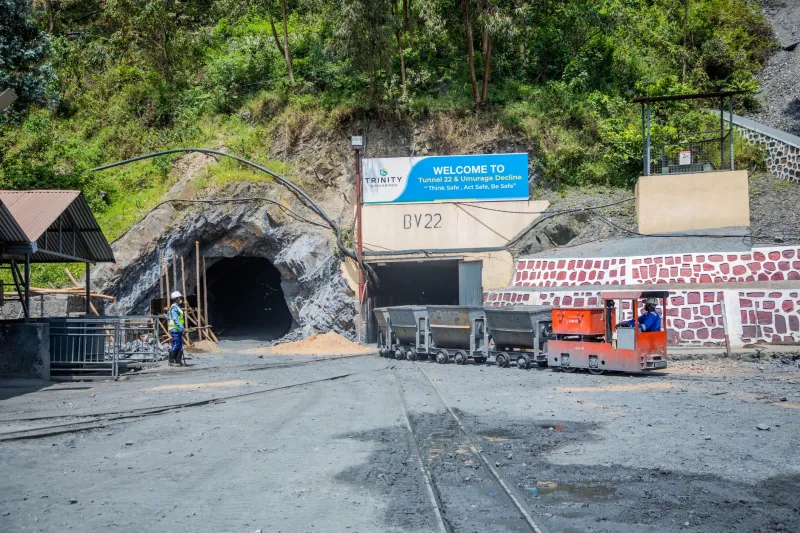
Every underground excavation disturbs the natural equilibrium of the surrounding rock mass. As ore is extracted, stress redistributes through the geological formation — sometimes gradually, sometimes violently. Rockbursts, one of the most dangerous phenomena in deep mining, occur when accumulated stress releases suddenly, ejecting rock fragments at high velocity. Subsidence events, by contrast, develop more slowly but can destabilize entire sections of an operation, threatening both personnel and equipment.
What makes these hazards particularly treacherous is their apparent unpredictability. Historically, experienced miners relied on visual inspection, auditory cues, and hard-won intuition to identify warning signs. While that expertise remains invaluable, it is fundamentally limited by human perceptual thresholds. Micro-seismic events — the faint precursors to larger failures — occur at frequencies and magnitudes below what the human senses can reliably detect.
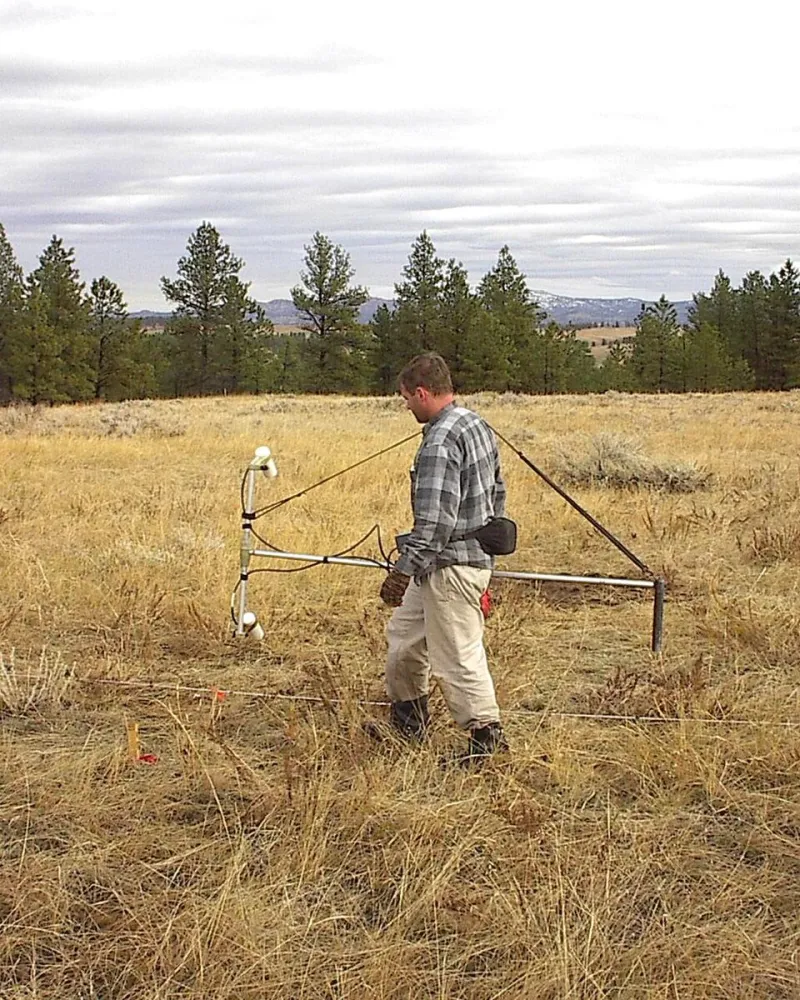
Modern seismic monitoring systems address that limitation directly. By deploying arrays of geophones and accelerometers throughout a mine's infrastructure, operators can capture continuous waveform data across a broad frequency spectrum. That data, processed through machine learning algorithms trained on thousands of historical seismic signatures, can distinguish between routine blasting activity, equipment vibration, and the specific acoustic fingerprints associated with developing instability.
From Data to Decision: The Role of Artificial Intelligence
The volume of seismic data generated by a modern mining operation is substantial. A single underground mine may produce hundreds of thousands of micro-seismic events per day, most of them geologically insignificant. The challenge has never been collecting the data — it has been making sense of it quickly enough to act.
This is where artificial intelligence has fundamentally changed the equation. Contemporary AI platforms trained on geomechanical datasets can analyze incoming seismic streams in near real time, flagging anomalous patterns that warrant human review and, in some configurations, triggering automated alerts or operational shutdowns without waiting for human intervention. The speed of that analysis is critical. In a rockburst scenario, the window between detectable precursor activity and the failure event can be measured in minutes.
Beyond immediate hazard detection, AI-powered systems are also enabling a more sophisticated form of predictive geomechanics. By correlating seismic activity with variables such as extraction depth, blasting schedules, groundwater levels, and geological mapping data, these platforms can model stress evolution across an entire mine plan — identifying zones of elevated risk before physical symptoms become apparent.
Several US operators have integrated these predictive models directly into their mine planning workflows, using seismic risk assessments to inform decisions about extraction sequencing, pillar design, and support installation. The result is a more proactive posture toward ground control, one grounded in continuous data rather than periodic inspection.
Open-Pit Applications: Slope Stability and Surface Monitoring
The application of seismic intelligence is not confined to underground environments. Open-pit operations face their own set of geotechnical challenges, chief among them slope instability. A slope failure in a large open-pit mine can displace millions of tons of material, bury equipment, and in the worst cases, prove fatal. The economic consequences alone — lost production, equipment damage, and remediation costs — can reach into the tens of millions of dollars.
Modern slope monitoring programs increasingly combine traditional instruments such as prisms, radar systems, and piezometers with seismic sensors capable of detecting the micro-fracturing activity that precedes slope movement. When a slope begins to creep toward failure, the rock mass generates characteristic acoustic emissions as internal fractures propagate. Seismic arrays positioned along pit walls can detect these emissions and, when integrated with surface deformation data, provide a multi-dimensional picture of slope behavior.
This integrated approach has proven particularly valuable in operations where slopes have been pushed to steeper angles to maximize ore recovery. By maintaining continuous seismic surveillance, operators can work closer to the geotechnical margin while retaining the situational awareness necessary to respond before conditions deteriorate.
Operational and Financial Implications
The case for advanced seismic monitoring extends well beyond safety compliance. For US mining companies operating under increasingly stringent regulatory frameworks and facing growing scrutiny from insurers and investors, the ability to demonstrate proactive ground control practices carries significant financial weight.
Insurance underwriters in the mining sector have begun to differentiate premiums based on the sophistication of an operator's geotechnical monitoring programs. Companies that can document continuous seismic surveillance, AI-assisted hazard assessment, and data-driven emergency response protocols are increasingly positioned to negotiate more favorable coverage terms. In an industry where insurance costs represent a meaningful line item, that differentiation matters.
Downtime reduction is perhaps the most directly quantifiable benefit. Unplanned ground failures force evacuations, trigger regulatory investigations, and require extensive remediation before operations can resume. Each of those consequences carries a cost — in lost production hours, labor, and equipment. When seismic systems identify developing hazards early enough to allow controlled intervention, operators can address the underlying geomechanical condition on their own schedule rather than responding to an emergency.
There is also a workforce dimension to consider. Recruitment and retention in the mining sector are ongoing challenges, and the industry's safety record plays a meaningful role in how prospective employees evaluate employers. Operations that can demonstrate a genuine commitment to worker protection — backed by visible, technology-driven safety infrastructure — tend to fare better in that competitive landscape.
The Path Forward
The technology underpinning seismic monitoring continues to advance rapidly. Wireless sensor networks are reducing the cost and complexity of system deployment, making comprehensive seismic coverage accessible to mid-sized operations that previously lacked the capital for full instrumentation. Edge computing architectures are enabling faster on-site data processing, reducing latency in hazard alerts. And the datasets accumulated by early adopters are continuously improving the accuracy of the AI models that interpret seismic activity.
What remains constant is the underlying principle: the earth communicates before it moves. The question for every mining operator is whether their systems are sophisticated enough to hear what the ground is saying — and whether their response protocols are mature enough to act on that intelligence before the silence ends.
For companies committed to extracting value responsibly and sustainably, seismic intelligence is no longer an optional enhancement. It is a foundational component of how modern mining operations are designed, managed, and protected.