Holding Ground: Why America's Mineral Stockpiling Strategy Is Becoming the New Frontier of Resource Security
For much of the past two decades, American industry operated on a straightforward assumption: the global marketplace would reliably deliver the minerals it needed, when it needed them, at prices that made domestic reserves largely unnecessary. That assumption has not aged well.
From lithium to cobalt, from neodymium to tungsten, the materials that underpin everything from electric vehicle batteries to precision defense systems have become flash points in a broader contest over economic and geopolitical influence. As a result, the conversation inside US mining boardrooms and federal agencies has shifted from logistics to strategy—from managing supply chains to fortifying them.
The Inventory Problem Writ Large
Stockpiling minerals is not a new concept. The United States maintained the National Defense Stockpile for decades as a Cold War hedge, accumulating reserves of materials deemed critical to military readiness. But the program was drawn down aggressively through the 1990s and early 2000s, as policymakers concluded that a globalized economy had rendered such reserves redundant.
That conclusion is now widely regarded as premature.
The COVID-19 pandemic exposed the fragility of just-in-time supply logic across virtually every industrial sector. But it was the escalating trade friction between Washington and Beijing that crystallized the specific vulnerability of America's mineral position. China currently controls the processing capacity for a substantial majority of the rare earth elements that US manufacturers depend upon—a concentration of leverage that has prompted a fundamental reassessment of what strategic reserves should look like in the twenty-first century.
"We spent a generation optimizing for efficiency and essentially outsourced our buffer," one senior mining industry executive noted during a recent policy roundtable in Washington. "What we're rebuilding now isn't just inventory. It's insurance."
The Economics of Holding
The financial case for mineral stockpiling is genuinely complicated. Maintaining physical reserves requires capital investment in storage infrastructure, ongoing management costs, and the opportunity cost of capital tied up in materials that may sit idle for years. For publicly traded mining companies answerable to shareholders expecting quarterly returns, the arithmetic has historically favored lean inventory over strategic accumulation.
But that arithmetic is being recalculated.
When the price of a critical material spikes—as lithium carbonate did between 2021 and 2023, rising by more than 400 percent at its peak—companies without buffer stocks face an unpleasant choice between absorbing crushing input costs or passing them downstream. The manufacturers who felt that pressure most acutely have since become advocates for supply agreements that include reserve provisions, effectively sharing the cost of security with their upstream partners.
Federal incentive structures are also evolving. The Inflation Reduction Act introduced provisions designed to encourage domestic sourcing and processing of critical minerals, and subsequent executive actions have directed agencies including the Department of Energy and the Department of Defense to identify gaps in the national stockpile and develop plans to address them. For mining companies willing to align their production and storage strategies with federal priorities, the policy environment now offers a more hospitable landscape than it has in decades.
Where Extraction Meets Accumulation
One of the more consequential shifts in current thinking involves the relationship between active mining operations and reserve-building. Traditionally, companies extracted what they could sell and managed inventory as a short-term operational variable. The emerging model treats reserves as a distinct asset class—one that commands its own investment thesis and requires its own operational discipline.
Several domestic producers of rare earth elements and battery-grade minerals have begun structuring extraction programs with an explicit stockpiling component, essentially running production slightly ahead of immediate market demand and banking the surplus in purpose-built facilities. This approach requires greater upfront capital but creates a cushion that provides leverage in contract negotiations and insulation against price volatility.
"The companies that will define the next decade of American mining aren't just thinking about what they can pull from the ground today," said one policy advisor who has worked with both industry and federal agencies on critical mineral strategy. "They're thinking about what they need to have on hand when the next disruption arrives—because it will arrive."
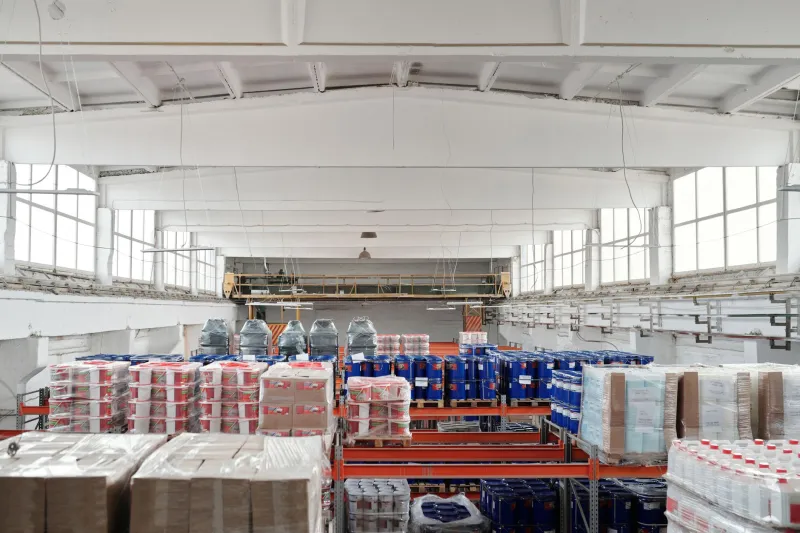
The geographic dimension of this strategy matters as well. Stockpiling facilities located within the continental United States, close to processing infrastructure and end-use manufacturers, offer logistical advantages that offshore reserves cannot replicate. Site selection for these facilities has become a specialized discipline, weighing proximity to transportation corridors against environmental permitting requirements and local workforce considerations.
The Policy Architecture Taking Shape
Federal engagement with the stockpiling question has accelerated considerably since 2022. The bipartisan infrastructure law and subsequent executive orders have directed billions of dollars toward domestic mineral production, processing, and reserve capacity. The Department of Defense has used its Title III authorities under the Defense Production Act to fund specific projects, including rare earth separation facilities and battery material processing plants, that serve dual commercial and strategic purposes.
The challenge is one of coordination. Multiple agencies hold pieces of the critical mineral puzzle—the Department of Energy, the Department of Defense, the Department of the Interior, and the United States Geological Survey each play distinct roles—and aligning their priorities has proven more difficult than any single agency's mandate would suggest. Industry participants frequently cite the need for a more unified federal framework as a prerequisite for the kind of long-term investment commitments that a genuine stockpiling strategy requires.
There is also the question of what to stockpile. Not all critical minerals carry equal strategic weight, and the list of materials considered essential shifts as technology evolves. The minerals that powered the first generation of electric vehicles are not necessarily the same ones that will power the next. Building reserves around today's demand profile risks creating tomorrow's stranded assets.
A Longer Horizon
Perhaps the most significant transformation underway is cultural rather than operational. American mining has long been oriented around the extraction cycle—find it, permit it, produce it, sell it. The stockpiling imperative introduces a different temporal logic, one that asks companies and their investors to accept returns that are deferred, contingent, and in some cases dependent on disruptions that everyone hopes will never materialize.
That is a harder story to tell on an earnings call than a record production quarter. But it is the story that the current geopolitical environment is demanding.
For mining operations willing to engage seriously with the strategic dimensions of what they produce, the opportunity is substantial. Federal partnerships, long-term offtake agreements with manufacturers seeking supply security, and preferential positioning in a policy environment actively favoring domestic producers all represent real and growing sources of value.
The ground beneath the American mineral economy is shifting. The companies that recognize stockpiling not as a cost center but as a competitive asset are already positioning themselves for a landscape in which holding ground—literally and figuratively—may prove to be the most consequential decision they make.