The Invisible Chokepoint: How Battery-Grade Lithium Processing Is Holding America's EV Ambitions Hostage
The conversation surrounding American energy independence has, in recent years, centered on two familiar focal points: the volume of lithium reserves buried beneath domestic soil and the expanding capacity of battery gigafactories rising across the Sunbelt and the Midwest. Both are legitimate concerns. Neither, however, addresses the most consequential constraint in the entire supply chain.
Between the mine and the battery cell lies a technically demanding, capital-intensive, and chronically underinvested process — the refining of raw lithium material into battery-grade lithium hydroxide or lithium carbonate. This is where American industrial ambition currently stalls. And until the extraction and processing community confronts this reality directly, the nation's electric vehicle revolution will remain structurally dependent on foreign refiners, most notably those operating within China's vertically integrated supply chain.
What "Battery-Grade" Actually Means
Not all lithium is created equal. The lithium carbonate or lithium hydroxide that enters a battery cathode must meet extraordinary purity thresholds — typically 99.5 percent or higher, with strict controls on trace contaminants including calcium, magnesium, iron, and sulfate compounds. Even minor deviations in purity specifications can compromise battery performance, reduce cycle life, or introduce safety risks at scale.
Achieving these standards from raw spodumene concentrate or lithium brine is not a straightforward industrial task. It demands a precise sequence of chemical processing steps — roasting, leaching, purification, and crystallization, among others — each of which must be calibrated to the specific mineralogical profile of the source material. Lithium extracted from hard-rock deposits in Nevada behaves differently in processing than brine-derived lithium from the Smackover Formation in Arkansas. Processing facilities must be engineered with that variability in mind.
This is not a problem that general-purpose mineral processing equipment can solve. It requires purpose-built infrastructure, specialized reagent management systems, and a workforce trained in the precise chemistry involved. These are investments that take years to plan, permit, finance, and commission.
The Gap Between Ore and Application
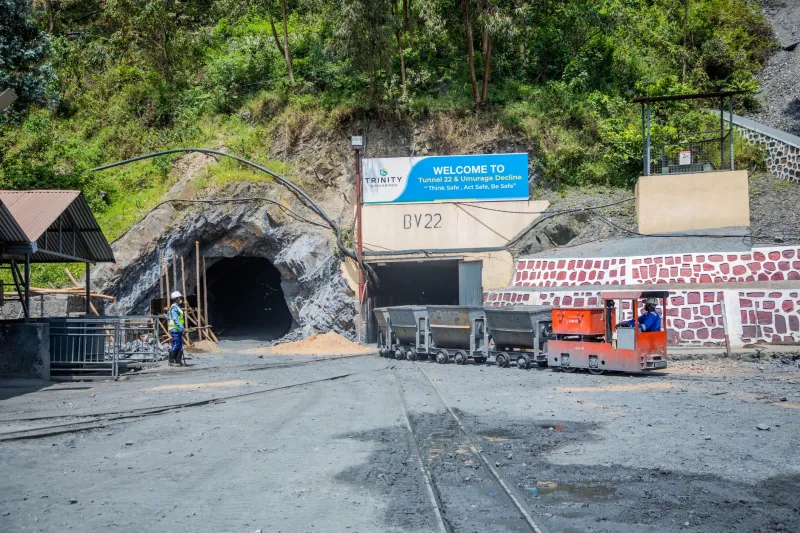
The United States currently possesses meaningful lithium resources. The USGS estimates domestic reserves in the range of one million metric tons, with identified resources substantially higher. Projects in Nevada, North Carolina, and the broader Lithium Triangle region of the American West have attracted significant exploration interest. Several have advanced to feasibility study or permitting stages.
Yet for all this upstream activity, the country hosts only a nascent downstream processing capacity. The overwhelming majority of lithium refined to battery-grade specification globally is processed in China, which controls an estimated 60 to 70 percent of refining capacity. Australia ships the bulk of its spodumene concentrate to Chinese converters. South American brine producers route much of their output through the same channels.
American mining operations that bring lithium to surface today face a stark choice: sell concentrate into an international market dominated by foreign refiners, or shoulder the enormous capital burden of building domestic conversion capacity without the benefit of an established industrial ecosystem to support it.
The Equipment Investment Reality
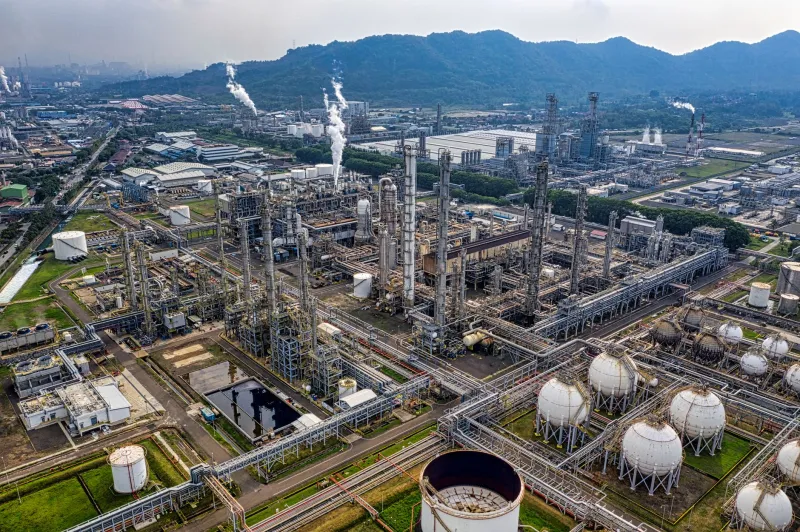
Building a battery-grade lithium processing facility is not analogous to constructing a conventional mineral concentrator. The unit operations involved — high-temperature roasting kilns, multi-stage leach circuits, solvent extraction systems, evaporative crystallizers, and advanced filtration equipment — represent a fundamentally different engineering challenge than crushing and flotation.
Capital expenditure estimates for greenfield lithium hydroxide conversion plants in the United States typically range from several hundred million dollars to well over one billion dollars, depending on throughput capacity and site-specific conditions. These figures do not include the upstream mining and concentration infrastructure, nor the permitting timelines that routinely extend project schedules by years.
Equipment lead times compound the challenge. Specialized processing vessels, high-alloy reactor systems, and custom crystallization units often carry procurement timelines of twelve to twenty-four months. In a sector where project financing is contingent on demonstrated technical feasibility, these delays create compounding risk that discourages investment.
For operations that have spent years developing a lithium resource, this processing gap represents the difference between a viable domestic supply chain and continued dependence on foreign conversion capacity.
Why Technical Complexity Becomes Strategic Vulnerability
The implications extend well beyond industrial economics. Battery-grade lithium is a foundational input for the lithium-ion cells that power electric vehicles, grid storage systems, and a growing array of defense applications. The Department of Defense has identified lithium as a critical mineral precisely because supply chain disruptions — whether caused by geopolitical friction, export restrictions, or logistical breakdown — could compromise both commercial and national security objectives.
When the refining chokepoint sits offshore, domestic reserves offer only theoretical security. The ore in the ground cannot power an EV or store grid electricity until it has been converted to a specification that battery manufacturers can actually use. A nation that controls the mine but not the refinery occupies a structurally weak position in the supply chain hierarchy.
This is a lesson that American policymakers and industrial leaders are beginning to internalize, though the pace of response has not yet matched the urgency of the challenge.
Pathways Forward for Domestic Processors
Several developments suggest that the processing gap, while formidable, is not insurmountable. Federal programs under the Inflation Reduction Act and the Bipartisan Infrastructure Law have created financing mechanisms — including loan guarantees and production tax credits — specifically designed to support domestic critical mineral processing. These instruments, while not sufficient on their own, materially improve the investment calculus for companies willing to commit to domestic conversion infrastructure.
Technological innovation is also contributing. Direct lithium extraction technologies, which offer the potential to recover battery-grade material more efficiently from brines and lower-grade sources, are advancing through pilot and demonstration phases at several American projects. If these approaches achieve commercial scale, they could substantially reduce the capital and energy intensity of domestic processing.
Equally important is the development of technical workforce capacity. Processing battery-grade lithium requires chemists, process engineers, and plant operators with a highly specific skill set. Building that human capital — through partnerships with universities, community colleges, and vocational training programs — is as essential as building the physical infrastructure.
The Strategic Case for Mastering the Middle
For American mining operations, the processing chokepoint represents not only a challenge but an opportunity of considerable magnitude. Companies that invest in mastering battery-grade conversion — that develop the technical expertise, the process know-how, and the operational infrastructure to deliver specification-compliant material at commercial scale — will occupy a position of genuine strategic value in the domestic supply chain.
Battery manufacturers and automakers operating under the domestic content requirements of federal incentive programs have compelling reasons to source from qualified American processors. The demand signal is real. The policy architecture to support investment is increasingly in place. What remains is the industrial will to close the gap between the lithium in the ground and the material that the battery economy requires.
The horizon is visible. Reaching it demands a clear-eyed recognition that the real constraint in American lithium supply is not what lies beneath the surface — it is the sophisticated, capital-intensive capability required to transform that resource into something the modern economy can actually use.