Wired for Work: How Mining's Automation Push Is Creating Jobs Instead of Eliminating Them
For an industry that has long measured success in tonnage and extraction rates, mining is navigating an unusually human challenge. Autonomous haul trucks patrol open-pit sites without drivers. Remote operation centers manage drilling rigs hundreds of miles from the nearest town. Predictive analytics platforms flag equipment failures before a single technician sets foot underground. And yet, across the United States, mining companies are struggling to find enough qualified people to keep their operations running.
The apparent contradiction—investing aggressively in automation while simultaneously fighting a labor crisis—is not a paradox so much as a pressure test. How operators respond to it will determine not just their near-term productivity, but their long-term viability in an increasingly competitive global minerals market.
The Numbers Behind the Tension
The scale of automation investment in the mining sector is difficult to overstate. Industry analysts project that global spending on mining automation technologies will surpass $4 billion annually within the next several years, with American operators accounting for a significant share. Autonomous vehicles, remote monitoring systems, AI-assisted geological modeling, and robotic processing equipment are no longer experimental—they are operational standards at many of the country's most productive sites.
At the same time, the National Mining Association estimates that tens of thousands of skilled positions across the United States remain either vacant or filled by workers approaching retirement age. The challenge is not simply one of quantity. The roles that automation cannot easily replace—equipment maintenance technicians, systems integrators, data analysts, safety officers, and remote operations supervisors—require a level of technical fluency that the current labor pipeline is not producing fast enough.
The result is an industry that has automated its most repetitive tasks while discovering that the remaining work demands more expertise, not less.
A Different Kind of Mining Career
For decades, the image of a mining job in the American imagination was inseparable from physical labor: long shifts underground, demanding conditions, and limited advancement. That perception, however outdated, continues to shape workforce recruitment in ways that cost operators dearly.
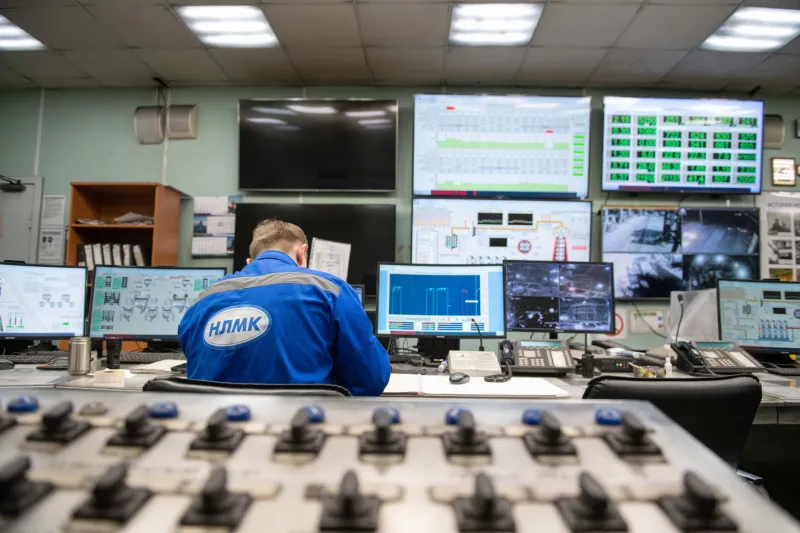
The reality of a modern mining operation looks considerably different. A remote operations center at a Nevada copper mine might employ a team of specialists who monitor autonomous drilling systems, analyze real-time sensor data from underground equipment, and coordinate logistics across multiple extraction zones—all from a climate-controlled facility. The job is closer in daily practice to aerospace systems monitoring than to traditional hard-rock mining.
Leading operators have recognized that competing for this talent pool means competing against industries that have historically attracted technically skilled workers: defense contracting, energy, advanced manufacturing, and even technology. That competition requires more than updated job descriptions. It requires compensation structures, career pathways, and workplace environments that can hold their own against white-collar alternatives.
Some companies are moving aggressively on all three fronts. Wages for automation technicians and remote operations roles at major US mining sites have climbed sharply in recent years. Structured advancement programs, tuition partnerships with community colleges and trade schools, and hybrid work arrangements for monitoring roles are becoming standard offerings rather than exceptional perks.
Retraining as a Strategic Asset
Perhaps the most consequential shift occurring across the industry is the reframing of workforce retraining—not as a reactive response to displacement, but as a proactive investment in operational capacity.
Operators who deploy autonomous haulage systems, for example, face an immediate challenge: the experienced drivers they relied on for decades no longer perform the same function. The choice is not simply to let them go. Many of those workers carry site-specific knowledge, safety instincts, and operational judgment that cannot be replicated by software. The more strategically minded operators are channeling that experience into maintenance, systems oversight, and training roles that directly support the automated infrastructure.
Freeport-McMoRan, Newmont, and other major domestic producers have invested in formal retraining programs that provide existing workers with pathways into technology-adjacent roles. Trade associations and state workforce development agencies in mining-heavy states like Nevada, Wyoming, and Arizona have begun co-funding similar initiatives, recognizing that a healthy mining workforce has direct implications for regional economies.
The underlying logic is straightforward: a fully automated mine that cannot maintain its own systems is not efficient—it is fragile. Human expertise remains the essential layer of resilience beneath the technological infrastructure.
The Risk of Getting the Balance Wrong
Not every operator has managed this transition thoughtfully. Some have accelerated automation deployment without investing proportionally in workforce development, creating operational gaps that surface during equipment failures, system outages, or periods of rapid production scaling.
An autonomous haul truck that breaks down in a remote location requires a technician who understands both the mechanical systems and the software environment managing them. When that expertise is unavailable on-site—because the company assumed automation reduced the need for skilled personnel—the result is costly downtime that erodes whatever efficiency gains the technology was supposed to deliver.
The risk, in other words, is not that automation replaces too many workers. It is that operators misread automation's effect on the workforce and end up with technologically sophisticated sites that are chronically understaffed for the roles that actually matter.
Building the Next Generation of Mining Professionals
The longer-term answer to this challenge runs through education and public perception in equal measure. Several community colleges in western states have introduced mining technology programs that combine traditional extraction fundamentals with training in autonomous systems, data analytics, and remote operations. These programs are producing graduates who are genuinely prepared for the roles that modern mining demands—and who are choosing those roles over alternatives because the career prospects are competitive.
Changing the public narrative around mining careers is slower work, but no less important. Industry organizations and individual operators are investing in outreach at the high school level, emphasizing the technical sophistication of modern extraction work and the economic opportunity it represents. In communities where mining has historically been a cornerstone employer, that message resonates. In others, it requires sustained effort to overcome outdated assumptions.
A Workforce Built for What Mining Is Becoming
The operators who will lead the next generation of American mineral extraction are not those who invested most heavily in autonomous machinery alone. They are those who understood that automation changes the nature of human work without eliminating the need for it—and who built their workforce strategies around that understanding.
The billions flowing into mining automation represent a genuine transformation of how extraction gets done. But the horizon of that transformation is only visible to operators who have invested equally in the people positioned to make it work. Technology and talent are not competing priorities. In the modern mining environment, they are the same priority expressed in two different forms.