Stranded at the Surface: The Quiet Collapse of America's Mineral Processing Infrastructure
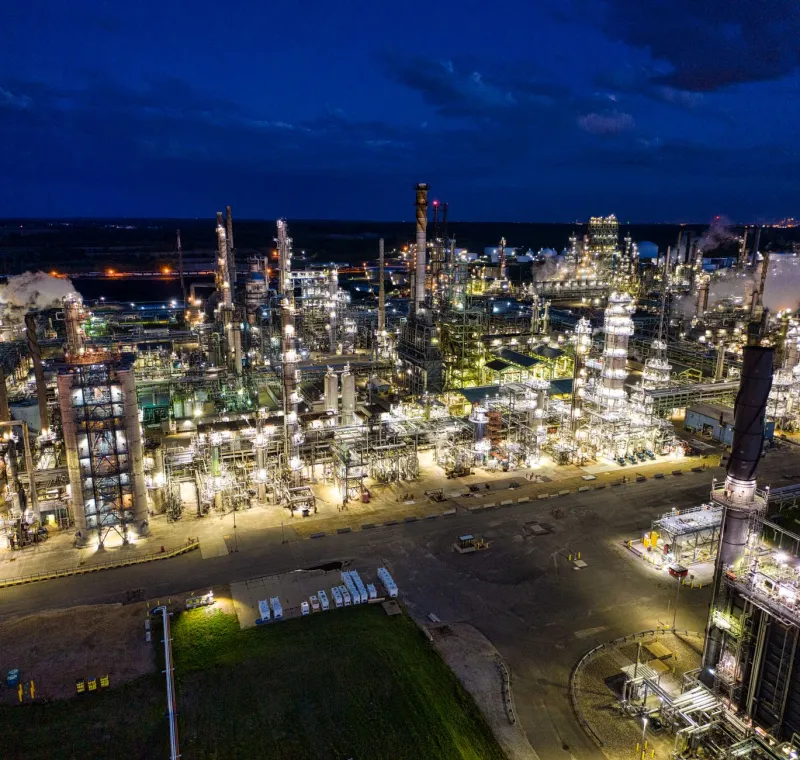
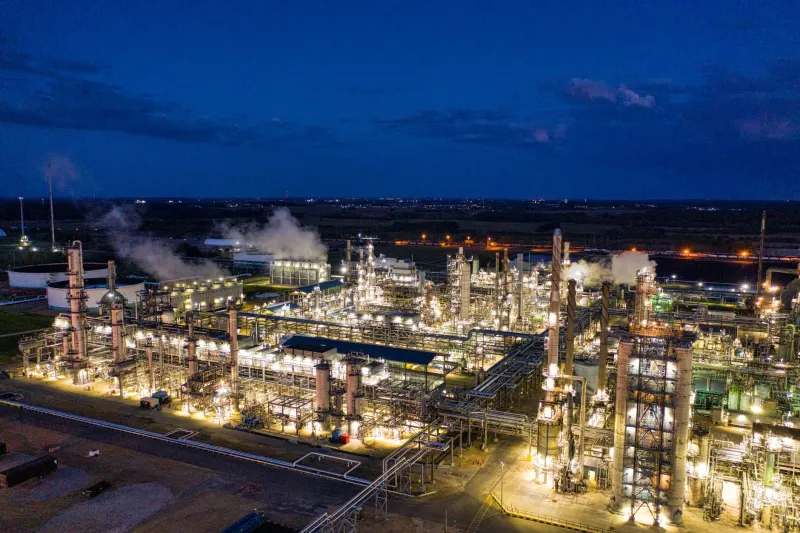
There is a persistent assumption in public discourse about American mining that the hard part is getting the material out of the ground. Drill the right formation, deploy the right equipment, secure the right permits — and the rest follows naturally. That assumption has proven costly. Across the United States, a generation of mineral processing facilities built during the mid-twentieth century industrial expansion is reaching the end of its operational life, and the pipeline of replacement capacity is nowhere near adequate to absorb what modern extraction operations are positioned to deliver.
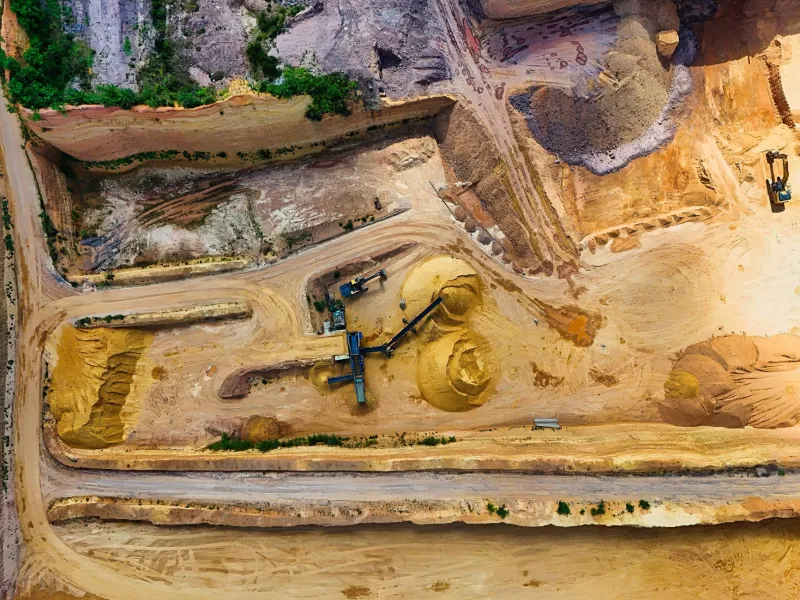
The result is a structural imbalance that threatens to undermine billions of dollars in upstream mining investment. Ore comes out of the ground. And then, increasingly, it waits.
A Bottleneck Decades in the Making
The deterioration of domestic processing capacity did not happen overnight. It accumulated gradually, driven by a combination of factors that each seemed manageable in isolation but compounded into a systemic problem over time.
For much of the late twentieth century, American companies offshored processing work to jurisdictions where labor costs were lower, environmental compliance was less rigorous, and energy was cheaper. That calculus made short-term financial sense. But it also meant that domestic facilities were starved of reinvestment capital. Maintenance was deferred. Upgrades were postponed. Skilled process engineers retired without successors being trained to replace them.
By the time policymakers began treating mineral supply chains as a national security concern — a recognition accelerated by pandemic-era shortages and escalating geopolitical tensions — the processing infrastructure that would be needed to support a domestic supply chain revival was already in serious disrepair. The United States had, in effect, spent three decades running down an asset base it is now urgently trying to rebuild.
The numbers are stark. Industry analysts estimate that bringing domestic mineral processing capacity into alignment with current and projected extraction output would require sustained capital investment measured in the tens of billions of dollars over the next decade. Current committed investment falls well short of that figure.
Why Processing Is a Harder Investment Than Extraction
From a pure capital allocation standpoint, processing facilities present a risk profile that is meaningfully more complex than mine development — a fact that often surprises observers outside the industry.
Mine projects, for all their technical and regulatory challenges, benefit from one structural advantage: the asset in the ground is not going anywhere. Mineral deposits have a permanence that allows developers to take a long view on return timelines, to phase investment incrementally, and to revisit economic assumptions as commodity prices shift.
Processing facilities carry no such patience. They are large, fixed-cost operations that require sustained throughput to remain economically viable. A refinery running at sixty percent capacity does not generate sixty percent of the profit — it frequently generates losses, because the overhead structure does not scale down proportionally. This means that processing investment is acutely sensitive to feed material consistency, long-term offtake commitments, and commodity price stability across a horizon of fifteen to twenty years.
Securing all three simultaneously, in a market environment characterized by price volatility and shifting trade policy, is an exercise that has deterred many otherwise capable capital allocators. The projects that do move forward tend to require creative financing structures, substantial government loan guarantees, or anchor offtake agreements with creditworthy counterparties — conditions that are difficult to assemble and frequently collapse before construction begins.
There is also the matter of technology selection. Modern mineral processing is not a single, standardized process. It is a collection of increasingly sophisticated techniques — hydrometallurgy, solvent extraction, electrowinning, advanced smelting — that must be matched precisely to the chemistry of the ore being processed. Selecting the wrong technology for a given deposit can render a facility economically unviable regardless of throughput volume. The technical due diligence required before a shovel enters the ground on a processing project is substantial, expensive, and time-consuming.
The Regulatory Dimension
Processing facilities face a regulatory environment that is, in certain respects, more demanding than that governing extraction operations. Smelters, refineries, and chemical processing plants generate waste streams, atmospheric emissions, and water discharge profiles that attract scrutiny from multiple federal and state agencies simultaneously.
Permitting timelines for new processing facilities routinely extend beyond five years. In some cases, they have stretched past a decade. For investors evaluating whether to commit capital to a domestic processing project versus routing that same material to an overseas facility where permitting is faster and compliance costs are lower, the arithmetic is frequently unfavorable to the domestic option.
This dynamic has not gone unnoticed at the policy level. Recent legislative efforts have attempted to streamline permitting for facilities deemed critical to national mineral security, and some state governments have moved to create expedited review pathways for processing investments that meet certain employment or strategic material thresholds. Progress has been uneven, however, and the gap between policy intent and permitting reality remains substantial.
Calculating the Investment Case
For operators willing to work through the complexity, the investment case for next-generation processing capacity is not without merit — it simply requires a different analytical framework than conventional mining project evaluation.
The key variable is integration. Facilities that can demonstrate a committed feed supply from upstream mining operations, combined with contracted downstream demand from manufacturers or battery producers, are able to construct a revenue visibility picture that partially offsets the inherent risks of large fixed-cost infrastructure. Vertically integrated operators — those controlling assets at multiple points along the mineral value chain — are structurally better positioned to make this case than standalone processors.
Energy cost management is the second critical lever. Processing facilities are energy-intensive by nature, and electricity costs represent one of the largest variable expense categories in refinery operations. Operators who can secure long-term power agreements at competitive rates, or who can co-locate with low-cost renewable energy generation, materially improve the economics of their processing investment. Several projects currently in development are structured specifically around access to favorable power arrangements as a foundational economic assumption.
Government incentive programs represent the third element of the contemporary processing investment calculus. The Inflation Reduction Act, the CHIPS and Science Act, and various Department of Energy loan programs have collectively created a more supportive environment for domestic processing investment than has existed at any point in recent memory. Navigating these programs effectively requires specialized expertise, but the capital available through them is meaningful enough to shift project economics in otherwise borderline cases.
The Horizon Ahead
The processing infrastructure deficit facing American mineral industries is real, significant, and unlikely to resolve itself through market forces alone. The technical barriers are high, the capital requirements are substantial, and the risk profile is genuinely challenging. None of that means the problem is unsolvable.
What it does mean is that the companies positioned to lead in domestic mineral processing over the next twenty years will be those that approach the challenge with the same rigor and long-term discipline they bring to their extraction operations. Processing capacity is not an afterthought to mining strategy — it is the mechanism through which extracted value actually reaches the market. Without it, the minerals in the ground remain, in the most literal sense, stranded assets.
The investment gap will close. The question is whether American operators will drive that process, or whether they will once again find themselves dependent on processing infrastructure built and controlled elsewhere.